
WHY?
Why I Started N.O. IT Strategy
While working as an IT Director for a mid-market organization, I had the opportunity to advise leadership teams outside the company on their IT decisions. I found that I really enjoyed helping these businesses navigate the bigger technology questions and providing insight that might otherwise have been missed.
That experience also showed me that businesses that cannot justify a full-time IT executive still need experienced IT leadership. They still need someone helping them think through strategy, risk, vendors, projects and the technology decisions that affect the business.
That is what led me to start N.O. IT Strategy.
WHAT?
What Makes This Different
N.O. IT Strategy is fully independent. I do not sell hardware or software licenses, and I do not receive kickbacks for anything I recommend. No vendor incentives, no product quotas, no tool-first answers.
The work starts with two questions: what does your business actually need, and how do we get you there?
WHO?
Who I Work Best With
I work best with business owners and leadership teams that already have IT resources in place but want more guidance around technology decisions, planning and accountability.
That might mean evaluating vendors, preparing for compliance requirements, planning major projects, reviewing cybersecurity risk or deciding how IT should evolve as the business grows.
The goal is not to replace the people already supporting your technology. It is to give leadership an independent perspective on the bigger picture.
WHY FRACTIONAL IT LEADERSHIP?
IT Support Handles the Day to Day. IT Leadership Connects It to the Business.
I started N.O. IT Strategy because I kept seeing the same need between day-to-day IT support and the bigger technology decisions businesses have to make.
Most organizations already have capable people keeping systems running, supporting users and managing technology. That work is important. My role is to add another layer: independent leadership focused on where the business is going and how technology should support it.
That means bringing structure to decisions such as:
- Building a technology roadmap around business priorities
- Evaluating vendor recommendations independently
- Understanding cybersecurity and insurance requirements
- Deciding when the current IT model needs to evolve
- Translating technology risk into business language
I help bring those decisions together so owners and leadership teams can make them deliberately, with a clearer view of cost, risk and business priorities.
EXPERIENCE ON BOTH SIDES OF THE TABLE
MSP, Internal IT and Business Ownership Experience
My background gives me a practical view of how technology actually operates inside small and mid-market organizations.
I have worked as a tech inside MSP environments, where I learned how outsourced IT providers think, price, prioritize and deliver service.
I have worked in and led internal IT, where technology has to support real staff, real systems, real budgets and real operational pressure.
I served as CIO for a 7-figure ecommerce company I owned and IT Director for a mid-market organization, which gave me firsthand experience making technology decisions as both the operator and the person responsible for business technology outcomes.
I have also led IT inside a nonprofit environment, where budgets, staffing, compliance, security and service delivery all have to be balanced carefully.
That combination helps me see what vendors own, what internal teams own and what leadership should never blindly delegate.
WHAT I BELIEVE
IT Should Be Owned by the Business, Not Just Operated by Vendors
A good MSP can be a valuable partner. A good internal IT team can keep an organization stable and moving. Good vendors can bring useful tools and expertise.
But none of them replace ownership.
The business still needs someone asking whether the model fits, whether the cost makes sense, whether risk is being managed and whether technology decisions are supporting the organization’s direction.
That is where independent IT leadership matters.
I do not sell hardware. I do not take vendor kickbacks. I do not push tools because they create recurring revenue.
My job is to help leadership understand what is happening, what needs attention and what decisions should be made before small gaps become expensive problems.
HOW I HELP
Clearer Decisions. Better Accountability. Less Drift.
N.O. IT Strategy helps organizations bring structure to technology decisions that often get spread across owners, office managers, internal staff, MSPs and vendors.
That can mean ongoing fractional IT leadership, interim IT leadership while you hire, an MSP accountability review, cyber insurance readiness work, AI governance, or planning a transition from outsourced support to internal IT.
The service may change. The goal does not.
- Clear ownership.
- Better vendor accountability.
- More predictable IT spend.
- Lower business risk.
- A roadmap leadership can trust.
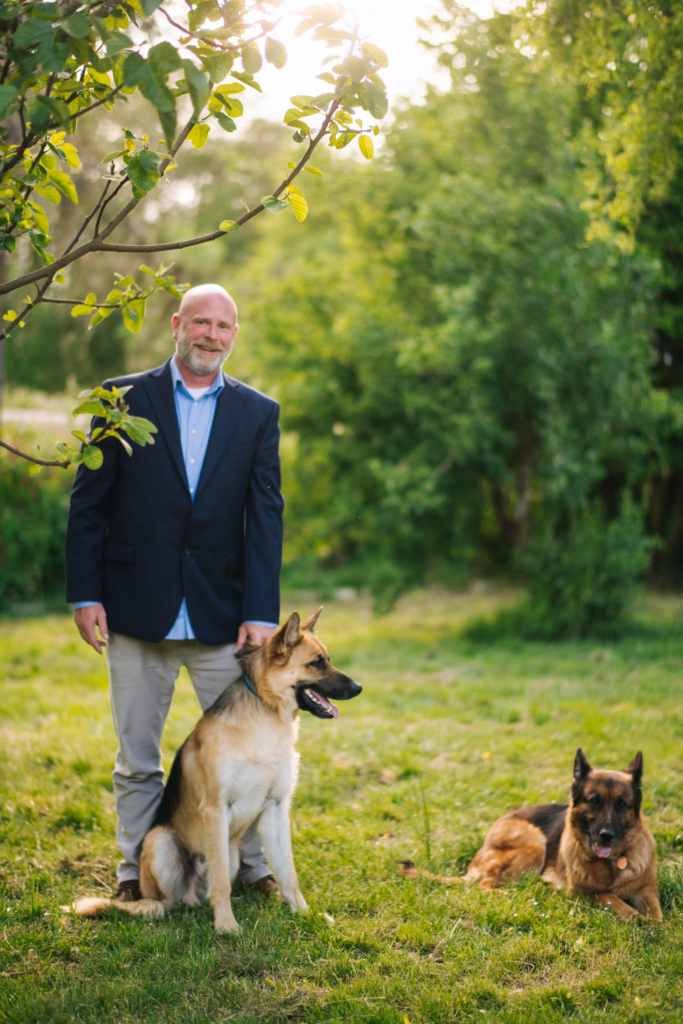
Founder Nate Olson with his two German Shepherds, “Stop it” and “Don’t”.
MSP and Vendor-Side Experience
Working inside managed service provider environments gave me a clear view of how outsourced IT providers operate, price, prioritize and deliver service.
That experience matters because many organizations depend on MSPs, but do not always have someone inside the business who knows how to manage that relationship. I understand the value a good MSP can bring, but I also understand where responsibility can become unclear, where scope can get blurry and where leadership still needs to own the direction.
That perspective helps me review MSP relationships fairly, without assuming the provider is always the problem or always the solution.
Internal IT and Nonprofit Leadership
Internal IT leadership is different from outside support. Inside an organization, technology has to work under real operational pressure: budgets, staffing limits, aging systems, leadership priorities, security expectations and day-to-day service needs.
My nonprofit IT leadership experience also shaped how I think about practical, responsible technology decisions. Nonprofits often operate with limited budgets, lean staffing and high expectations around security, compliance, reporting and service delivery.
That environment requires judgment. Not every problem can be solved by buying another tool, and not every risk can be ignored because resources are tight.
CIO and Business Ownership Experience
I served as CIO while owning ESS, which gave me firsthand experience making technology decisions from both sides of the table.
That means I understand the technical side of the decision, but also the business side: cost, timing, risk, customer impact, staff capacity and whether the investment actually supports the organization.
That perspective shapes how I work today. I do not look at IT decisions as isolated technical projects. I look at how those decisions affect the business.
Independent Guidance and How I Work
N.O. IT Strategy is independent by design.
I do not sell hardware. I do not take vendor kickbacks. I do not recommend tools because they create commissions or recurring revenue. My role is to help leadership understand what the business actually needs, what should be owned internally, what should be delegated and what should be questioned before money is spent.
I work best with owners, executives and leadership teams who want plain-language guidance and practical next steps. The goal is not to make IT sound more complicated. The goal is to make the decisions clearer.
START WITH CLARITY
Let's Meet!
If your organization has IT support, but no clear IT ownership, the first step is a conversation.
No sales script. No pressure. Just a practical discussion about where responsibility sits today, what may be drifting and whether your organization needs more leadership around technology decisions.